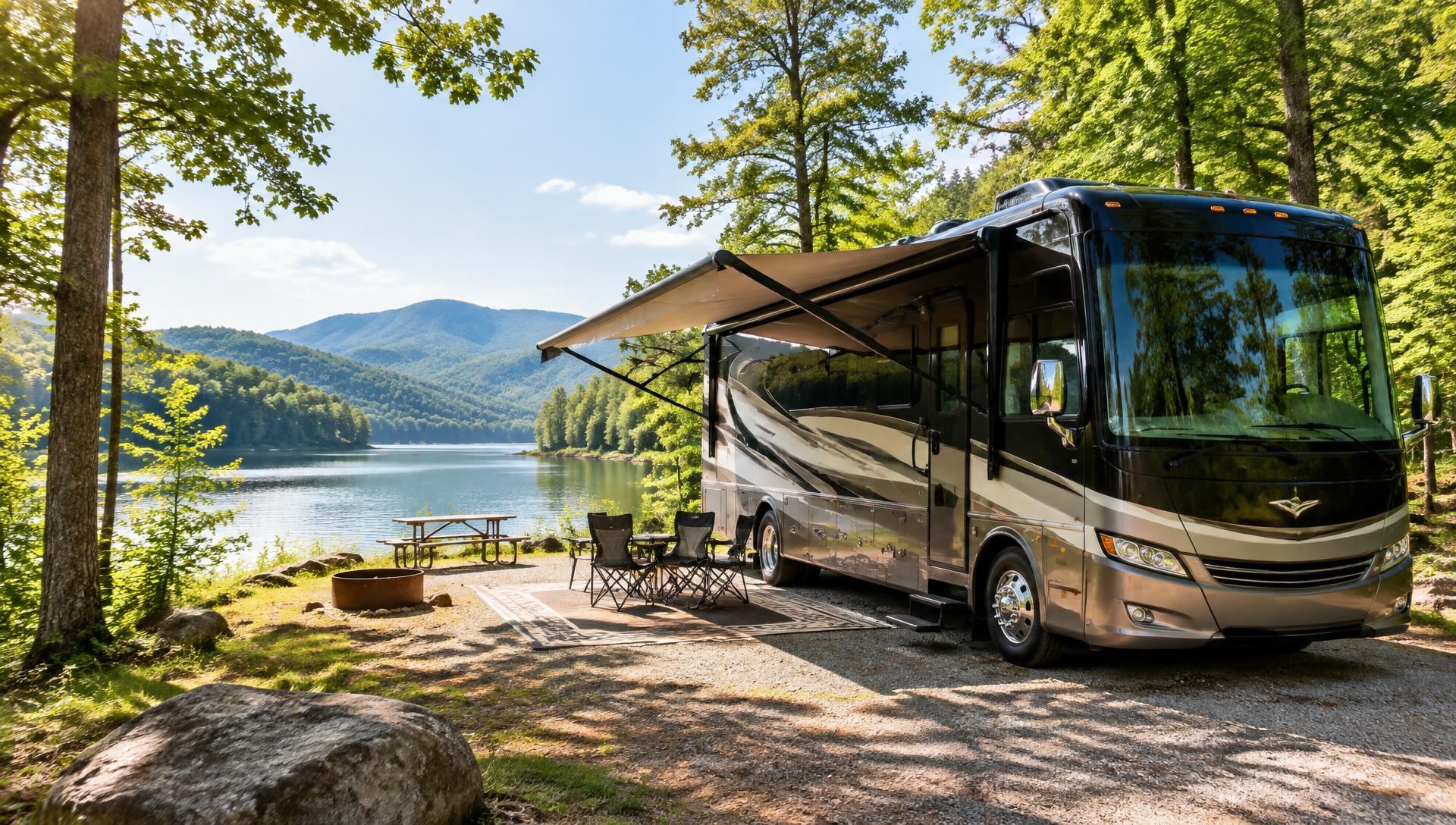
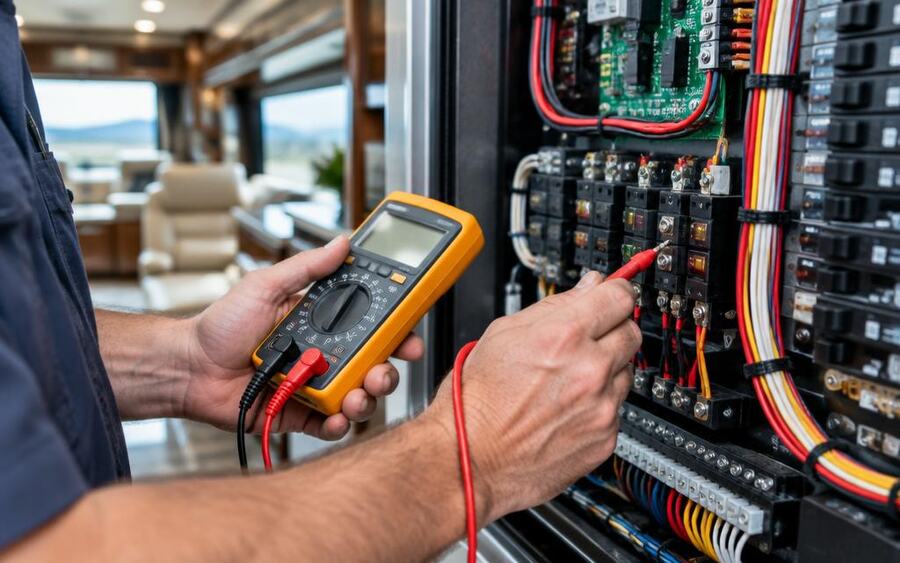
Picture a hot July Saturday at a full campground on Lake Lanier. Every coach in the loop has two or three air conditioners running, refrigerators are cycling and someone's making coffee in a residential kitchen. The campground's electrical system is working as hard as it ever will, and the voltage at your pedestal may be lower than you think.
Most owners never look at it. But low or unstable voltage is one of the quiet ways expensive equipment in a luxury coach gets damaged.
Why low voltage is a problem
Air conditioners, refrigerators and other motor-driven appliances are designed to run within a certain voltage range. When voltage drops, motors draw more current to do the same work. They run hotter, and over time that heat shortens their life. Electronics like inverters, chargers and control boards can also misbehave when power is weak or unstable.
The opposite problems happen too. A miswired pedestal, an open neutral or a power surge can send voltage far too high, which can damage electronics in an instant.
Common pedestal problems
- Low voltage on hot, busy afternoons when the whole campground is pulling power
- Loose or worn receptacles that heat up, discolor or melt plugs
- Miswired pedestals with reversed polarity or a missing ground
- Open neutral faults, which can send dangerous voltage swings to a coach
- Breakers that trip under the load of a large coach
How to protect your coach
Use an electrical management system
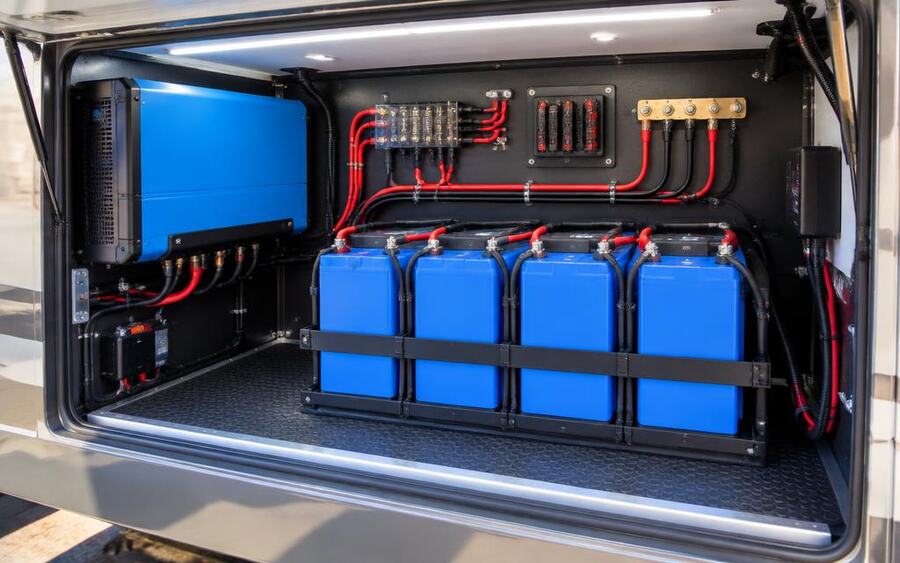
A surge protector stops some spikes, but an electrical management system (EMS) goes further. It monitors voltage and wiring faults and shuts power off to the coach when something is out of range, then restores it when the power is good again. Many luxury coaches have one built in; if yours doesn't, a portable or hardwired unit is a worthwhile upgrade. If you're not sure what your coach has, that's a quick question to answer during an electrical service visit.
Look before you plug in
Check the pedestal for burn marks, cracked faces or loose receptacles. Turn the pedestal breaker off before plugging in or unplugging, then turn it back on. Make sure your plug seats firmly.
Watch the numbers
Many coaches show line voltage on the inverter or energy management panel. Glance at it during a busy afternoon. If it keeps dropping low or your EMS keeps cutting power, it's the pedestal or the campground supply, not your coach.
Manage your load
On weak power, avoid running every A/C, the washer/dryer and the induction cooktop at once. Many coaches have load management that sheds circuits automatically; know how yours works and what it turns off first.
Use the inverter and batteries wisely
If your coach has a strong inverter and a large battery bank, especially lithium, it may be able to support some loads when shore power is poor. Settings matter here, so ask before you change them.
Signs your coach has already been affected
- A/C units that trip breakers or struggle to start
- Burned or discolored shore power plug or cord ends
- Inverter or charger error codes after a campground stay
- Lights flickering or appliances behaving strangely
- An EMS that keeps reporting faults
These can point to a problem at the campground, inside the coach, or both. Finding which one is a diagnostic job, and it's worth doing before guessing at parts.
RV Action Express helps luxury coach owners in Cumming, Lake Lanier and North Atlanta with electrical diagnosis and protection. Call (866) 292-6838 or request service.
Questions about this topic
A surge protector mainly absorbs voltage spikes. An electrical management system also watches for low or high voltage and wiring faults and disconnects the coach automatically when power is unsafe.
Yes. Report scorched receptacles, tripping breakers or persistent low voltage to the office and ask to move sites if needed. It protects you and the next camper.
Don't. Discoloration usually means heat from a poor connection, and it can get worse quickly. Have the plug and receptacle checked and replaced if needed.
Need a hand with your coach?
Call Russell and describe what you're seeing.